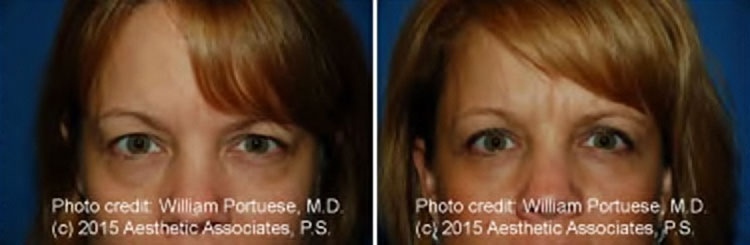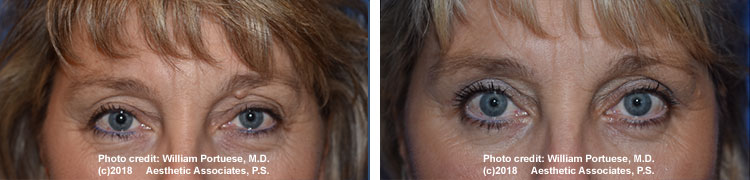
As we age, the delicate skin surrounding the eyes can lose elasticity, leading to excess skin, puffiness, under-eye bags, and a tired appearance. Blepharoplasty can remove or reposition excess skin and fat to restore a smoother, more alert look while maintaining natural facial expression.
Upper eyelid surgery, also known as upper blepharoplasty, is designed to remove excess skin and, when appropriate, small pockets of fat from the upper eyelids. This procedure can restore a more refreshed, youthful appearance by correcting drooping or hooded eyelids that create a tired or aged look. Good candidates for upper blepharoplasty typically have loose upper eyelid skin that obscures the natural eyelid crease, rests on the eyelashes, or contributes to a heavy, hooded appearance. Many patients also seek treatment to improve eyelid asymmetry or achieve a more alert appearance. In some cases, excess upper eyelid skin can interfere with peripheral vision. When visual field obstruction is documented, upper eyelid surgery may be performed for functional or medical reasons in addition to cosmetic improvement. During upper blepharoplasty, incisions are carefully placed within the natural upper eyelid crease. This location allows scars to heal discreetly and remain well hidden once recovery is complete. By removing excess skin and, when necessary, excess fat, upper eyelid surgery can significantly rejuvenate the appearance of the eyes while maintaining a natural look.
The primary goal of lower eyelid surgery is to reduce or eliminate under-eye bags caused by prominent fat deposits beneath the eyes. These fat pads can create a puffy or tired appearance that often becomes more noticeable with age. Because these fat deposits are influenced by anatomy rather than body weight, they typically do not improve with diet, exercise, or weight loss. During lower blepharoplasty, excess orbital fat may be carefully removed or repositioned to create a smoother transition between the lower eyelid and the cheek. In many younger patients, this can be accomplished using a transconjunctival approach, where the incision is made inside the eyelid. Because the incision is hidden within the eyelid, there is no visible external scar. Patients over the age of 50 may also have loose or crepey lower eyelid skin in addition to under-eye bags. In these cases, a conservative skin-tightening procedure can be performed through a small incision placed just beneath the eyelashes. The incision is typically closed with surgical tissue adhesive, minimizing the need for external sutures.
Consultation with board-certified facial plastic surgeon Dr. William Portuese: A comprehensive consultation for upper and lower eyelid surgery typically takes about one hour in our office. During this visit, Dr. Portuese reviews your medical history, evaluates your eyelid anatomy, discusses your aesthetic and functional concerns, and assesses factors that may affect surgical planning, including dry eye symptoms and skin quality. The consultation with Dr. Portuese generally lasts approximately 30 minutes, followed by a detailed discussion with our patient care coordinator and office manager regarding treatment options, pricing, scheduling, and recovery expectations. Once surgery is scheduled, patients also attend a pre-operative appointment with one of our registered nurses to review instructions and ensure they are fully prepared for their procedure.
What Is Eyelid Surgery?
Technically known as blepharoplasty, eyelid surgery is a facial rejuvenation procedure designed to improve the appearance of the upper eyelids, lower eyelids, or both. Upper eyelid surgery addresses excess skin that can create a heavy or hooded appearance, while lower eyelid surgery targets under-eye bags, puffiness, and age-related contour changes. Blepharoplasty may be performed as a standalone procedure or combined with other facial cosmetic treatments, such as a facelift, brow lift, or laser skin resurfacing, to achieve more comprehensive facial rejuvenation.
Types of Eyelid Surgery
Because every patient's anatomy and aesthetic goals are different, Dr. Portuese develops a personalized treatment plan for each individual. Depending on your needs, your procedure may involve one or a combination of the three primary types of eyelid surgery offered in Portland.
Upper eyelid surgery
Upper eyelid surgery in Portland is designed to remove or reduce excess skin and fat that can develop due to aging or genetics. These changes can affect facial appearance and, in some cases, contribute to a reduced field of vision caused by heavy or drooping upper eyelids. By addressing this excess tissue, upper blepharoplasty can also help relieve strain on the surrounding muscles, which may contribute to a tired or fatigued feeling around the eyes. Once the excess skin and fat are removed, the upper eyelids appear lighter and more refreshed, creating a naturally more awake, alert, and rejuvenated appearance. In functional cases, vision may also improve when drooping eyelid tissue is no longer obstructing the visual field.
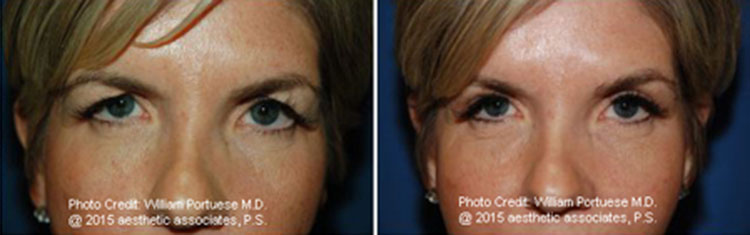
Before undergoing elective cosmetic surgery on the eyes, it is essential that medical conditions have now been addressed, and are in order, such as high blood pressure or skin conditions. Additionally it is important patients avoid taking any blood thinners such as aspirin, non-steroidal anti-inflammatories like ibuprofen, vitamin E and herbal supplements for fourteen days before and following the eyelid surgery. This helps reduce any bruising after the surgical procedure. Significant medical problems will demand clearance by the patient's primary care physician, cardiologist, or internist.
Patients check in on the day of surgery with our front office administrative team. A registered nurse then admits the patient into the surgical suite and reviews final pre-operative details. Patients must not eat or drink after midnight the night before surgery, as general anesthesia is typically administered by a board-certified physician anesthesiologist. Prior to the procedure, patients also meet with the anesthesiologist to review the anesthesia plan and address any questions.
Oregon facial plastic surgeon Dr. Portuese carefully marks the upper and lower eyelids to guide precise removal of excess skin and fat. For upper eyelid surgery, small amounts of skin and fat are removed and the incision is closed with dissolvable sutures placed within the natural eyelid crease for minimal visibility. For lower eyelid surgery, fat deposits contributing to under-eye puffiness are typically removed through an internal (transconjunctival) incision, and the area may be closed with tissue adhesive when needed.
Once the procedure is complete, anesthesia is discontinued under the supervision of the physician anesthesiologist. Patients are then taken to the recovery area for monitoring before being discharged home with a responsible caregiver. In some cases, upper eyelid surgery may be performed under local anesthesia, while lower eyelid surgery is generally performed under general anesthesia for comfort and safety.
How long is recovery after eyelid surgery for baggy eyelids?
Recovery from eyelid surgery (blepharoplasty) typically takes about two weeks for most patients to return to normal social and work activities. During the initial recovery period, swelling and bruising around the eyes are expected and may be noticeable for up to 1 - 2 weeks. No bandages are typically placed over the eyes.
For upper eyelid surgery, dissolvable sutures are used and are usually absorbed within 7 - 10 days. Lower eyelid incisions, when present, are often closed with tissue adhesive that also dissolves within a similar timeframe. After the procedure, the upper eyelid incision may appear pink for several weeks to up to 1 - 3 months before gradually fading into a fine, discreet scar hidden within the natural eyelid crease.
Most patients take approximately two weeks off from work and social activities. Strenuous exercise should be avoided for several weeks to support proper healing and reduce swelling. Makeup can typically be applied to the upper eyelids once sutures have fully dissolved, usually around 10 days after surgery, depending on individual healing progress.
The cost of eyelid surgery is set by the amount of time it takes to perform the procedure in a conventional operating room, time monitored with a physician anesthesiologist under general anesthesia, and the doctor's fees for performing the process along with the post operative follow-up appointments for just one year. Our plastic surgery price list is located on our website.
Does medical insurance cover eyelid surgery for baggy eyes?
In some cases, medical insurance may contribute to the cost of eyelid surgery when the procedure is deemed medically necessary rather than purely cosmetic. This typically applies when excess upper eyelid skin causes a significant obstruction of the visual field.
To determine eligibility for coverage, documentation is usually required, including visual field testing, clinical photographs, and detailed medical records showing the degree of eyelid drooping (such as the relationship between the pupil and upper eyelid margin). These materials are submitted to the insurance provider for preauthorization once medical necessity is established. Patients should also be prepared for potential co-pays, deductibles, and other out-of-pocket expenses depending on their insurance plan.
After upper or lower eyelid surgery in Portland, Oregon, patients typically return to the clinic for a postoperative evaluation about one week after surgery. Additional follow-up visits are commonly scheduled at approximately 30 days and again at three months. During these appointments, healing is assessed and postoperative photographs may be taken to document results. Final outcomes from eyelid surgery are long-lasting, often maintaining improvement for 10 to 15 years or more depending on individual factors.
Portland is the largest city in Oregon, located along the Willamette and Columbia Rivers near Mount Hood. It is known for its green spaces, bridges, bike-friendly infrastructure, and strong focus on sustainability. Popular attractions include Washington Park, the Oregon Zoo, the Portland Japanese Garden, and a vibrant downtown filled with cafes, breweries, and cultural venues. The city is also recognized for its active arts, music, and theater scenes, making it a major cultural hub in the Pacific Northwest.
With its mix of natural beauty and urban amenities, Portland is often ranked among the most desirable places to live in the United States, offering residents and visitors access to outdoor recreation, cultural events, and year-round activities.